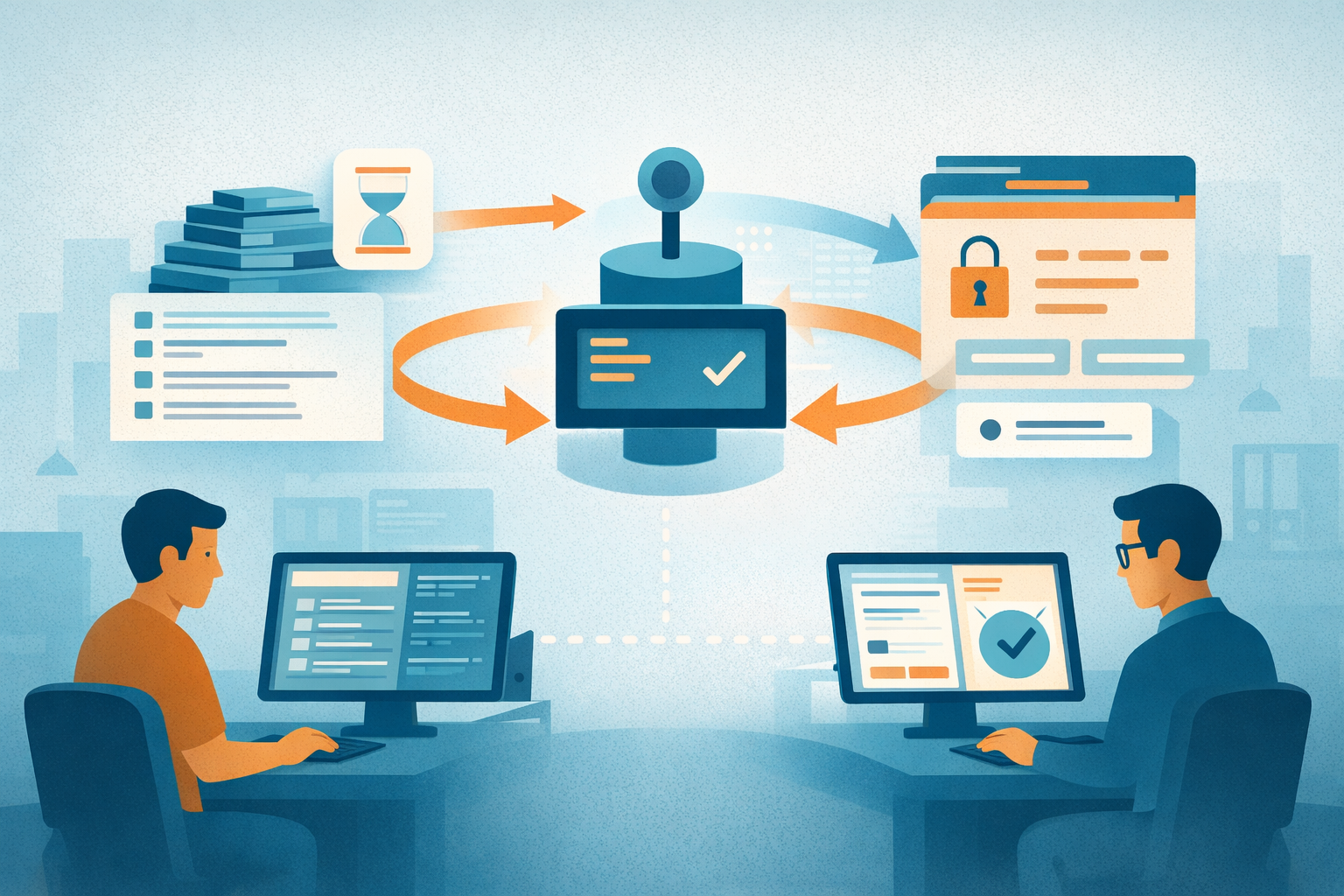
If you’re pushing LLM or RAG features into production, you already know the stakes: the models aren’t just code, they’re evolving systems that interact with unpredictable users and highly variable data. Traditional QA isn’t enough. To ship resilient AI and win confidence from customers and stakeholders, adversarial testing needs to move to the top of your playbook.
Adversarial testing: why it matters for LLM and RAG systems
Adversarial testing or “red teaming” is about trying to make your AI fail on purpose, before malicious actors or edge-case users do. For LLMs and RAG, that means probing for prompt injections, jailbreaks, hallucinations, data leakage, and subverted retrieval strategies.
LLM systems are vulnerable to cleverly crafted prompts that skirt safety limits and encourage harmful, biased, or unauthorized outputs.
RAG and hybrid architectures have unique takeover risks: manipulating the retrieval pipeline, poisoning source documents, or confusing context windows so the model behaves unpredictably.
Adversarial testing uncovers real issues that aren’t obvious until your model is live: privacy leaks, bias amplification, data extraction attacks, and unreliable inferences; all the stuff that keeps CTOs and CISOs up at night.
How do tech leaders integrate adversarial testing for LLM/RAG?
Simulate attacks with both manual red teaming and automated tools and test vectors like prompt injections, data poisoning, and retrieval manipulation.
Chain attacks across model and retrieval layers; don’t assume vulnerabilities stop at the model boundary.
Use playbooks like MITRE ATLAS, OWASP ML Security Top 10, and keep logs for every test; they’re useful for team learning, postmortems, and compliance.
Layer in robust monitoring so adversarial scenarios are caught in real time, not just during scheduled security reviews. Real-time monitoring is essential for both security and reliability.
Involve domain experts and skeptics. Adversarial ideation is creative work, not just automation. It takes deep product knowledge and a healthy dose of adversarial thinking to imagine how your outputs could be abused.
Simulate attacks with both manual red teaming and automated tools and test vectors like prompt injections, data poisoning, and retrieval manipulation.
Chain attacks across model and retrieval layers; don’t assume vulnerabilities stop at the model boundary.
Use playbooks like MITRE ATLAS, OWASP ML Security Top 10, and keep logs for every test; they’re useful for team learning, postmortems, and compliance.
Layer in robust monitoring so adversarial scenarios are caught in real time, not just during scheduled security reviews. Real-time monitoring is essential for both security and reliability.
Involve domain experts and skeptics. Adversarial ideation is creative work, not just automation. It takes deep product knowledge and a healthy dose of adversarial thinking to imagine how your outputs could be abused.
Over the past few years, CTOs have been building LLM-based systems using a DAG workflow approach. Autonomous agentic systems are a different sport. We’ve had reliability as a key question and it’s even more critical when a model can take actions (call tools, write to systems, trigger workflows). There’s incredible power here, but also big challenges.
A few definitions to start
Autonomous agentic system: an LLM wrapped in a loop that can plan, take actions via tools, observe results, and continue until it reaches a stop condition (or it’s forced to stop).
Tool calling: the agent selecting from a constrained action space (tool names + schemas) and emitting structured calls; your runtime executes them, validates outputs, and feeds results back into the loop.
Orchestration (the “real software” around the model): state management, retries, idempotency, timeouts, tool gating, context assembly/pruning, audit logging, and escalation paths.
Closed-loop evaluation (Plan -> Act -> Judge -> Revise): a repeatable harness where you run realistic tasks, score outcomes (ideally against ground truth and human-calibrated judges), learn what broke, and iterate.
Guardrails + safe stopping: runtime-enforced constraints (policies, budgets, circuit breakers, permissions) that limit what the agent can do and force it to stop or escalate when risk rises or progress stalls.
A small set of practices that pay off fast
Treat your tools like a product surface, not a pile of functions.
The failure mode is “death by a thousand tools”: overlapping capabilities, ambiguous names, and huge schemas that make selection brittle. Keep tools narrow, make them obviously distinct, and hide tools by default unless they’re relevant to the current step. “Just-in-time” instructions and tool visibility is a pragmatic way to scale without drowning the model in choices.
Move reliability into deterministic infrastructure (not prompt magic).
If an agent can trigger side effects (create a ticket, refund an order, email a customer), you need transactional thinking: idempotent tools, checkpointing, “undo stacks,” and clear commit points. Prompts don’t roll back production systems; your runtime does.
Put hard budgets and explicit stop reasons into the main loop.
Most “runaway agents” are simply missing guardrails that set limits on: iterations, tool calls, dollars, and wall-clock time; and “no progress” detectors (same tool call repeating, same plan restated, same error class recurring). When the agent hits a threshold, it should stop with a structured summary: what it tried, learned, and needs from a human.
Design for long-running work with durable state and resumability.
If the agent’s job can outlast a single context window (or a single process), assume it will crash, time out, or be interrupted. Store state externally, make steps replayable, and separate “planning notes” from the minimal context required to proceed. The goal is to resume cleanly without redoing expensive work or compounding earlier mistakes.
Make evaluation real: production-like tasks, ground truth, and judges you can trust.
Vibe checks don’t catch regressions. You want a small-but-representative set of real tasks sampled from production distributions, with ground truth where possible, and automated judges that are calibrated against human agreement (so you know what “good” means). Also assume reward hacking and metric gaming will happen. Build detection for it the same way you do for any other adversarial input.
Security guardrails: constrain action space, validate everything, and sandbox execution.
Tool calling expands your attack surface (prompt injection is just one angle). Practical defaults: strict schema validation, allow-lists for tool targets, content sanitization, least-privilege credentials, and sandboxed execution for anything that can run code or touch sensitive systems.
Want to learn how TechEmpower can help you or your team with Agentic AI?
The most “copyable” part is how they hit tool sprawl in the real world and moved to just-in-time instructions, plus a very concrete evaluation approach (ground-truth sets, human agreement, judge calibration, and the reality of reward hacking).
A CTO-level framing of why “agents” change the trust model: autonomy, integration into workflows, atomicity/rollback thinking, and why governance has to be part of the architecture.
Focuses on the annoying reality: agents that run for hours/days need a harness that’s built for resumability, recoverability, and controlled progress—not just bigger context windows.
A dense, case-study-heavy sweep of what shows up across production systems: context engineering, infrastructure guardrails, circuit breakers, and why “software fundamentals” keep winning over clever prompting.
If you’re serious about closed-loop improvement, this is the unglamorous foundation: how to build and maintain ground truth sets that support regression testing and meaningful “judge” signals.
A solid mental model for “tools as a constrained action space,” plus practical guardrails (unit tests around tool selection, injection defenses, and how to reduce boilerplate as your toolset grows).
A pragmatic implementation-oriented checklist, including explicit loop limits, retry patterns, and when to escalate—useful for teams moving from prototypes to something operational.